Characteristics and Applications of Explosion-Proof Solenoid Valves
Magpie Valve Selection: Accurate Matching Ensures Reliable Control
Valve Technology Sharing
Characteristics and Applications of Explosion-Proof Solenoid Valves
Explosion-proof solenoid valves play a critical role in high-temperature and high-pressure environments, particularly in hazardous applications requiring corrosion resistance and reliable operation. While the internal components may vary depending on specific working conditions, the solenoid coil design remains relatively consistent, with differences primarily in power ratings and diameters. These valves are capable of handling pressures ranging from a few bar to over 100 bar, making them suitable for a wide range of pipeline systems.
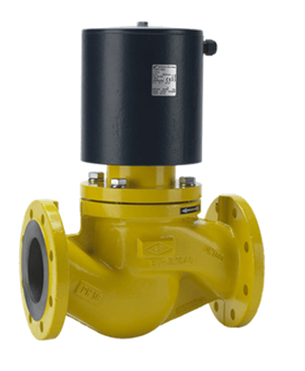
Structure: Direct-acting distributed solenoid valve (Note: "distributed direct-acting" may be a corrected term for "distributed braking type").
Working Principle: Combines advantages of both direct-acting and pilot-operated types. Operates without pressure differential, using electromagnetic force to directly actuate the valve core. Functions reliably in low-pressure or even zero-pressure systems.
Product Series Reference: Often corresponds to the "Phase III" series in product catalogs.
Structure: Pilot-operated piston solenoid valve.
Working Principle: Requires a pressure difference between inlet and outlet (upstream pressure > downstream). Electromagnetic force controls only the pilot valve; the main valve is actuated by pressure differential. Suitable for medium to high-pressure environments.
Product Series Reference: Often categorized under the "Phase IV" series.
Commonality: All models feature stainless steel enclosures for corrosion resistance and mechanical strength, and are explosion-proof, certified for use in flammable or explosive environments.
Customization: Internal components (valve core, seals, etc.) are tailored based on specific working conditions:
High Temperature: Uses high-temperature-resistant stainless steel (e.g., 310S) or special alloys.
High/Ultra-High Pressure (10–100+ bar): Reinforced piston/valve core structures with materials resistant to deformation under pressure.
Corrosive Media: Materials like 316L or Hastelloy with PTFE (Teflon) seals for maximum corrosion resistance.
General Compatibility: Coils are generally standardized with explosion-proof construction and uniform safety ratings. Differences lie in power ratings and matching with valve size:
Small-Caliber Valves: Require lower power; electromagnetic force is sufficient for direct-acting operation.
Large-Caliber Valves: Require higher power coils to drive the pilot/main valve but must balance power consumption and heat dissipation.
Customization Options: Coil parameters (e.g., number of turns, insulation class) can be adjusted to match operating pressure (ranging from a few bar to over 100 bar) and media temperature (ambient or elevated).
Valve Type | Suitable Pressure Range | Typical Applications | Key Advantages |
Direct-Acting Solenoid Valve | 0 to mid-low pressure (0–16 bar) | Low-pressure pipelines, vacuum systems, startup with no pressure | Zero-pressure start, stable in low-pressure |
Pilot-Operated Piston Valve | Mid to ultra-high pressure (10–100+ bar) | High-pressure fluid control, industrial piping, hydraulic systems | Pressure-differential actuation, high strength, large flow |
Material and Safety: Fully stainless-steel construction with explosion-proof design ensures corrosion resistance, mechanical strength, and compliance with safety standards for hazardous environments.
Wide Operating Range: Customizable for conditions from 0 to 100+ bar, ambient to high temperatures, and both neutral and corrosive media, achieved through adaptable internal components.
Design Flexibility: Coil power scales with valve size; structural types (direct-acting or pilot-operated) are selectable based on needs. Supports highly customized production, including non-standard pressure ratings or interface specifications.
For deeper technical details, such as specific pressure-to-diameter relationships or explosion-proof certification levels, refer to the product manuals or the "Phase III" and "Phase IV" series charts to quickly match customer or project requirements.