Graphite Packing vs. Aramid Fiber Packing: A Basic Comparison
In industrial production, sealing technology is a key aspect to ensure the normal operation of equipment and to prevent medium leakage. Packing, as a traditional sealing material, is widely used in pumps, valves, reactors, and other equipment. Graphite packing and aramid fiber packing are two common types of packing on the market, each with unique performance characteristics and application scenarios. This article will provide an in-depth comparison of these two types of packing to help you better choose the appropriate sealing material.
Graphite packing is a sealing material primarily composed of graphite, woven with various reinforcing fibers such as carbon fibers or metal wires. It has the following notable characteristics:
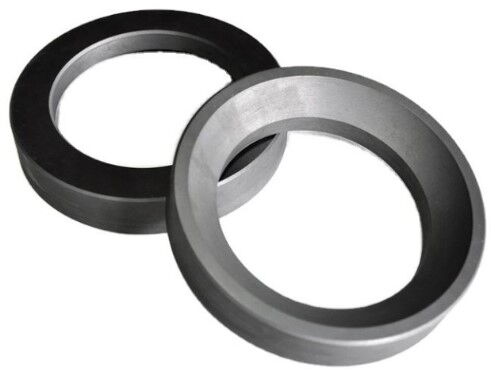
Graphite itself has good lubricating properties, which means that during operation, the friction coefficient between graphite packing and the shaft or valve stem is very low. This low-friction characteristic not only reduces equipment wear but also decreases the heat generated by friction. At the same time, graphite has good thermal conductivity, allowing it to quickly transfer generated heat and prevent localized overheating, thereby extending the service life of equipment.
Graphite packing can operate stably under extreme conditions of high temperature and high pressure. It is suitable for environments with temperatures up to 600°C or even higher, and can withstand relatively high pressures. This high temperature and pressure resistance make it an ideal choice for sealing valves, pumps, and reactors in high-temperature, high-pressure, and corrosive media conditions. For example, in chemical production, many reactors require reactions under high temperature and pressure, and graphite packing can effectively prevent leakage of reactive media, ensuring the safety and stability of the production process.
Graphite packing is highly versatile and can be applied to a variety of equipment and media. Its good flexibility allows it to adapt to sealing parts of different shapes and sizes, making installation convenient. At the same time, graphite packing has high strength and can withstand significant axial pressure, providing good protection to the shaft. This high-strength feature ensures that graphite packing can maintain stable sealing performance even under high-load conditions.
The manufacturing cost of graphite packing is relatively low, making it an economical choice. It is a unique all-purpose sealing packing capable of meeting sealing requirements under various working conditions. In industrial projects with strict cost control, graphite packing is a highly cost-effective option.
Aramid fiber packing is a sealing material primarily made from aramid fibers, precisely woven after multiple impregnations with lubricants, PTFE emulsions, and other agents. In recent years, it has gradually emerged in industrial applications and has gained widespread attention due to its excellent performance.
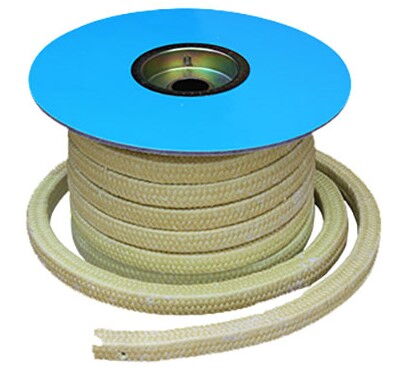
Aramid fibers inherently have excellent chemical resistance, capable of resisting various chemical media, including acids and alkalis. This chemical resistance allows aramid fiber packing to perform well when handling corrosive media, and to operate stably in environments where traditional sealing materials struggle. At the same time, aramid fiber packing has high resilience. Even after long-term use or exposure to high pressure, it can maintain its original shape and elasticity, ensuring the durability of sealing performance.
Cold flow refers to the phenomenon where materials gradually deform under prolonged stress. Aramid fiber packing has low cold flow characteristics, which means that over long-term use, it will not lose sealing effectiveness due to cold flow. In addition, aramid fiber packing has high linear speed characteristics, allowing it to adapt to high-speed equipment. In high-speed pumps, reactors, and other equipment, aramid fiber packing can effectively prevent medium leakage, ensuring normal operation.
Aramid fiber packing can resist wear from particulate media, which is very important for equipment handling media containing solid particles (such as ash, slurries, etc.). It can maintain stable sealing performance under the impact and abrasion of particulate media, reducing the risk of leakage caused by particle wear. At the same time, aramid fiber packing can withstand relatively high temperatures, suitable for applications with high-temperature requirements. Its excellent high-temperature performance allows normal operation under temperatures up to 230°C, providing reliable sealing for equipment in high-temperature environments.
Aramid fiber packing can be used alone or in combination with other types of packing. This combinability allows it to be flexibly adapted according to different working conditions to achieve optimal sealing. Aramid fiber packing is widely applied in pumps, valves, and rotating machinery, especially suitable for sealing devices in environments containing abrasive particles. It is excellent for use with superheated steam, solvents, liquefied gas, and syrups, and serves as a very good asbestos replacement in pump systems.
After understanding the characteristics of graphite packing and aramid fiber packing, it is necessary to put them side by side for a thorough comparison. This way, we can clearly see which one performs better in different scenarios, which has advantages, and which has limitations. By making this comparison, we can select sealing materials more purposefully and make more scientific and reasonable decisions in practice. Next, we will conduct a detailed comparison of these two types of packing.
Performance Indicator | Graphite Packing | Aramid Fiber Packing |
Self-lubrication | Excellent, low friction | Good, but not as good as graphite |
Thermal conductivity | Excellent | Poor, often needs to be combined with other materials |
High-temperature resistance | High, can withstand temperatures above 600°C | High, stable around 230°C |
Chemical resistance | Good, not suitable for strong oxidizers | Excellent, resists various chemical media |
Wear resistance | Good, suitable for high temp and high pressure | Outstanding, especially for particulate media |
Elasticity and resilience | Poor | High resilience, maintains shape |
Cold flow characteristics | Moderate | Low cold flow, does not easily deform over long-term use |
From the performance comparison, graphite packing excels in self-lubrication and thermal conductivity, suitable for high-temperature and high-pressure conditions, but is weaker in resistance to strong oxidizers and some complex chemical media. Aramid fiber packing has significant advantages in chemical resistance, wear resistance, elasticity and resilience, and cold flow characteristics, especially suitable for sealing requirements involving particulate media and high-temperature environments.
Application Scenario | Graphite Packing | Aramid Fiber Packing |
High-temperature, high-pressure equipment | Suitable, e.g., high-temperature steam pipes, reactors | Suitable, but temperature limit must be considered |
Corrosive media | Suitable, but not for strong oxidizers | Suitable, resists various acids and alkalis |
Particulate media | Suitable, but wears faster | Very suitable, strong wear resistance |
High-speed equipment | Suitable, but lubrication must be noted | Very suitable, high linear speed compatible |
Food and pharmaceutical industries | Not suitable, potential contamination risk | Suitable, can be combined with other materials |
Graphite packing has a relatively low manufacturing cost and is economical. Although its service life may not be as long as that of aramid fiber packing, its price advantage makes it a highly cost-effective option in cost-sensitive industrial projects. Aramid fiber packing has a higher initial investment, but its service life is 4–20 times that of ordinary packing, and leakage is much lower. In the long term, aramid fiber packing can significantly reduce maintenance and replacement costs, offering high cost-effectiveness. In continuous operations in industries such as petroleum, chemical, and power generation, its economic benefits remain evident.
Selecting the right packing requires comprehensive consideration of multiple factors, including equipment operating conditions, the nature of the medium, and budget.
High-temperature, high-pressure environments: If equipment operates under high temperature and pressure, graphite packing is a reliable choice. It can withstand high temperatures and pressures, ensuring sealing performance. For example, in chemical reactors or steam pipelines operating at high temperatures, graphite packing effectively prevents medium leakage.
Particulate media environments: For equipment handling media containing solid particles (e.g., ash, slurries), aramid fiber packing is a better choice. Its excellent wear resistance can withstand the impact and abrasion of particulate media, reducing leakage risks. For instance, in ash pumps or slurry pumps, aramid fiber packing maintains stable sealing performance and prolongs equipment life.
High-speed equipment: In high-speed pumps, reactors, or other equipment, aramid fiber packing's high linear speed capability allows it to adapt to fast operation, maintaining stable sealing and reducing leakage issues. Graphite packing can also be used for high-speed equipment, but its performance may be less stable under extreme high-speed conditions.
Corrosive media: For corrosive media (acids, alkalis, etc.), aramid fiber packing is ideal due to its chemical resistance, ensuring sealing in corrosive environments. For example, in pumps and valves handling acidic or alkaline solutions, aramid fiber packing effectively prevents leakage and protects equipment from corrosion.
High-temperature media: For high-temperature media (e.g., superheated steam, hot oil), both graphite and aramid fiber packing can provide good sealing performance. Graphite packing can operate stably at higher temperatures, up to 600°C or more, while aramid fiber packing performs well around 230°C.
High cleanliness requirements: In industries such as food, pharmaceuticals, and papermaking, where the medium requires high cleanliness and no contamination is allowed, aramid fiber packing can meet these requirements when combined with other materials, such as PTFE fibers. Graphite packing, due to potential contamination, is generally unsuitable.
Cost-sensitive projects: If the project requires strict cost control, graphite packing is an economical choice, with a relatively low manufacturing cost and reasonable price, meeting basic sealing needs while controlling costs.
Long-term investment projects: For large industrial projects or continuous operations in petroleum, chemical, or power industries, although aramid fiber packing has a higher initial cost, its long service life and excellent sealing performance significantly reduce maintenance and replacement costs, providing high long-term cost-effectiveness. For example, in high-temperature, high-pressure steam pipelines of large power plants or large reactors in chemical plants, using aramid fiber packing reduces maintenance frequency and leakage risks, improving operational efficiency and saving substantial costs over time.
Graphite packing and aramid fiber packing are two important materials in the industrial sealing field, each with unique performance characteristics and application scenarios. Graphite packing, with excellent self-lubrication, thermal conductivity, and high temperature and pressure resistance, performs well in sealing high-temperature, high-pressure equipment and corrosive media, making it an economical classic choice. Aramid fiber packing, with excellent chemical resistance, high resilience, low cold flow, and high linear speed, shows significant advantages in sealing particulate media, high-temperature environments, and high-speed equipment, making it a high-performance modern sealing material.
When selecting packing, it is necessary to comprehensively consider equipment operating conditions, medium properties, and budget. For high-temperature, high-pressure environments and corrosive media, graphite packing is a reliable choice, while for particulate media, high temperatures, and high-speed equipment, aramid fiber packing is more suitable.
