What is High-Temperature Ball Valve?
In many industrial fields such as petrochemicals, long-distance pipelines, and urban heating, ball valves are omnipresent. With advantages including low fluid resistance, easy operation, rapid opening and closing, excellent sealing performance, and high reliability, they have rapidly developed in just a few decades to become indispensable equipment. However, as industrial production increasingly demands high-temperature conditions, traditional soft-sealed ball valves, limited by their operating temperature, struggle in environments exceeding 200°C. At this point, high-temperature ball valves emerged, becoming the ultimate sealing solution for high-temperature applications.
The sealing performance of a ball valve primarily depends on the valve seat material. When the valve seat is made of polytetrafluoroethylene (PTFE) or filled PTFE, the valve is a soft-sealed ball valve. Such valves perform excellently at normal temperatures and environments below 200°C, making them widely used in general industrial and civil applications. However, once the temperature rises, their sealing performance is significantly reduced.
Hard-sealed ball valves, as the name suggests, use metal materials for the valve seat. This design enables them to easily handle temperatures above 250°C and is therefore also called a high-temperature ball valve. In high-temperature conditions, hard-sealed ball valves exhibit strong sealing capability and adaptability due to their unique metal sealing pair structure.
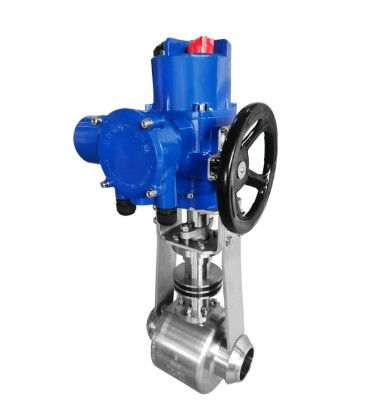
The metal sealing pair is the core feature of high-temperature ball valve sealing. Its advantage lies in its extremely wide applicable temperature range because the thermal expansion coefficients of different metals do not vary significantly. With proper material selection, they can largely maintain uniform contact under high temperatures, effectively coordinating thermal deformation.
However, metal sealing pairs are not flawless. Due to the high hardness of metal materials, the required contact pressure for sealing is also high. Even when preloading is applied to achieve sealing, excessive sealing pressure accelerates wear between the valve seat and the ball. Additionally, the friction coefficient of metal sealing surfaces is high, increasing the operating torque of the ball valve. To address these issues, elastic sealing structures were developed.
The introduction of elastic sealing structures brought a qualitative improvement to the sealing performance of high-temperature ball valves. They offer reliable performance, strong elastic compensation, and a wide applicable temperature range. Both floating ball valves and trunnion-mounted ball valves can be perfectly adapted. Under the combined effect of preloading and fluid pressure, the valve seat tightly presses against the ball, deforming the seat material to achieve sealing. The key to sealing effectiveness lies in whether the seat can fully compensate for the ball's out-of-roundness and microscopic unevenness under fluid pressure and preloading. Therefore, sufficient sealing contact pressure between the seat and the ball is essential to ensure reliable sealing.
The structural design and working principles of high-temperature ball valves are critical for stable operation in high-temperature environments. Below, we explore several common high-temperature ball valve structures and how they achieve efficient sealing and reliable operation under high temperatures.
These valves mainly consist of the valve body, ball, stem, metal valve seats, and flexible graphite sealing rings between the seat and body. The two valve seats are symmetrically arranged around the stem axis and cleverly embedded in the valve body. The seats can slide freely within the valve body slots, while sealing between the seats and the body is achieved through flexible graphite sealing rings. The compressibility of the graphite sealing rings is crucial: even when the ball expands due to heat within a certain temperature range, the valve does not jam. This hard-sealed structure is suitable for conditions up to 343°C.
Elastic-sealed high-temperature ball valves are structurally more complex. They build upon the hard-sealed design by adding metal elastic rings, compressing rings, and sealing gaskets. Among the two valve seats, one is a metal seat that can slide within the valve body slot, while the other is a deformable metal elastic ring seat. When the ball expands due to heat, the metal elastic ring seat deforms, preventing the ball from jamming. The metal elastic ring functions as the sealing element of the valve seat, compensating for temperature differences, pressure, and wear, thereby ensuring stable and reliable sealing.
High-temperature control ball valves use a disc spring-loaded sealing pair structure. The valve consists of the body, ball, stem, rear seat, rear seat sealing ring, front seat, front seat sealing ring, compressing ring, and disc spring. The front seat, front seat sealing ring, and compressing ring form one assembly, pressed by the disc spring. After assembly, the disc spring is in a compressed state. It provides initial sealing force while compressing the sealing ring between the seat and body to achieve sealing. The two seats are symmetrically embedded around the stem axis, and the seats can slide within the valve body slots. When the ball expands due to heat, the seat assembly slides, and the disc spring deforms, preventing the ball from jamming and ensuring normal operation under high-temperature conditions.
In industries such as petroleum, chemical, and energy, high temperatures pose severe challenges to pump and valve sealing performance. When medium temperatures exceed 200°C, ordinary rubber seals often harden, crack, or fail, resulting in loss of sealing function. Although metal seals are relatively stable at high temperatures, differences in thermal expansion coefficients may cause changes in fit gaps, leading to leakage or equipment failure.
For instance, in refinery catalytic cracking units, seals need to operate continuously at 300–500°C. In such extreme conditions, multiple factors including peak temperature, duration, and medium characteristics must be considered to ensure reliability and durability.
To meet high-temperature requirements, several high-performance sealing materials are available:
- Flexible Graphite Material: Flexible graphite, with a wide temperature range (-200°C to 450°C), is particularly suitable for high-temperature steam valves. It maintains stable sealing performance under extreme temperature variations and effectively prevents fluid leakage, making it an ideal choice for high-temperature sealing.
- Silicon Carbide Material: Silicon carbide, known for high hardness and excellent thermal conductivity, is commonly used in mechanical seal rings of high-temperature, high-pressure pumps. It can withstand extreme pressure and heat while maintaining the flatness and stability of the sealing surface, ensuring reliable sealing.
- PTFE Composite Material: PTFE composites, reinforced with glass fiber or carbon fiber, can increase temperature resistance to around 260°C. They retain PTFE’s chemical inertness and low friction while enhancing mechanical properties and heat resistance, performing well in high-temperature dynamic sealing applications.
- PEEK Material: Polyether ether ketone (PEEK) is a high-performance engineering plastic with long-term operating temperatures above 250°C. It offers excellent mechanical strength, dimensional stability, and chemical resistance, maintaining stable physical and chemical properties under high temperatures, making it suitable for complex conditions and high-temperature sealing.
Proper material selection can significantly extend seal life. For example, a chemical plant upgraded from nitrile rubber to fluororubber, extending seal life from 3 months to 2 years, effectively reducing maintenance costs and risks caused by equipment downtime. Among high-performance materials, PTFE and PEEK are commonly used in high-temperature sealing. PTFE is ideal for dynamic sealing due to its high-temperature and chemical resistance as well as low friction, while PEEK is recognized for comprehensive performance, including mechanical strength, thermal stability, creep resistance, and fatigue resistance, ensuring reliable operation in complex conditions.
High-temperature ball valves also face challenges. On one hand, extreme conditions require continuous development of high-performance sealing materials to meet increasingly stringent demands. On the other hand, manufacturing processes must be precise to ensure component quality and overall valve reliability.
Furthermore, maintenance is critical due to harsh operating conditions. Regular inspection and maintenance, including checking for corrosion or deformation and inspecting internal sealing components, are essential. Only through proper maintenance can high-temperature ball valves fully realize their advantages, extend service life, and reduce operating costs.
As seal guardians in industrial high-temperature environments, high-temperature ball valves play an irreplaceable role in various fields. From optimized sealing structures to high-performance sealing materials, every technological advance enhances their performance. With ongoing innovation and breakthroughs, high-temperature ball valves are expected to handle increasingly complex conditions, ensuring safe and efficient industrial operations. At the same time, attention must be given to their challenges, actively seeking solutions to drive continuous development, allowing high-temperature ball valves to shine even brighter in industrial applications.
