How to Choose Between Carbon Fiber and Graphite Packing
In the complex operation of modern industry, sealing materials play a vital role. Whether in petroleum, chemical processing, power generation, or metallurgy, the reliable operation of equipment depends heavily on effective sealing solutions. Among the many sealing materials available today, carbon fiber packing and graphite packing stand out as preferred choices across a wide range of industrial applications due to their exceptional performance and versatility. This article provides an in-depth exploration of the characteristics, advantages, and industrial applications of carbon fiber and graphite packing, helping you better understand their critical importance in industrial sealing systems.
Among numerous industrial sealing materials, carbon fiber packing distinguishes itself through outstanding performance, earning its reputation as a benchmark in high-performance sealing. It not only meets sealing requirements under extreme operating conditions but also effectively extends equipment service life and reduces maintenance costs. Below, we examine the material properties, application fields, and unique advantages of carbon fiber packing to understand why it occupies such an important position in industrial sealing.
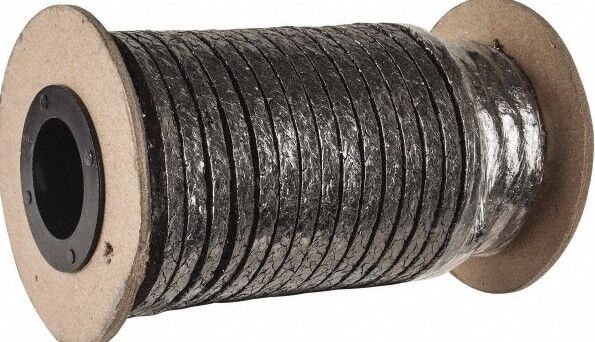
Carbon fiber is a special fiber composed primarily of carbon elements and is widely recognized in industrial materials for its remarkable mechanical properties and distinctive physical characteristics. Typically containing more than 90% carbon, carbon fiber inherits the inherent advantages of carbon-based materials, such as high-temperature resistance, wear resistance, electrical and thermal conductivity, and corrosion resistance. At the same time, it stands out due to its pronounced anisotropy, flexibility, and excellent processability.
Carbon fiber is characterized by extremely high strength and modulus combined with low density, resulting in an exceptionally high strength-to-weight ratio. This makes it unique among high-strength materials and highly desirable for demanding industrial applications.
Pure carbon fiber packing is manufactured using carbon fiber as the primary material and processed through specialized techniques, during which it is impregnated with polytetrafluoroethylene (PTFE) and special lubricants. This carefully engineered formulation endows carbon fiber packing with a wide range of superior properties, including high-pressure resistance, self-lubrication, high strength, high modulus, excellent thermal conductivity, outstanding chemical stability, and exceptional wear resistance.
Thanks to these characteristics, carbon fiber packing can maintain stable sealing performance even under extreme working conditions. Whether exposed to high temperatures, high pressures, or corrosive media, it consistently demonstrates exceptional reliability.
Carbon fiber packing is used extensively across a wide range of industries, including petroleum, chemical processing, chemical fiber production, coal mining, power generation, and metallurgy. Equipment in these sectors often operates under complex and demanding conditions, such as exposure to corrosive liquids, organic solvents, high temperatures and pressures, or particle-laden fluids. With its excellent overall performance, carbon fiber packing has become an ideal sealing solution for such equipment.
In the petroleum and chemical industries, carbon fiber packing is widely applied to seals in flanges, valves, reactors, and pumps. During operation, these components frequently handle corrosive liquids such as acids and alkalis, as well as organic solvents. The excellent chemical stability of carbon fiber packing enables it to maintain reliable sealing performance in harsh chemical environments, effectively preventing leakage and ensuring safe equipment operation.
At the same time, its superior thermal conductivity and wear resistance allow it to operate stably over long periods under high temperatures and high linear speeds. This significantly reduces maintenance frequency and lowers overall operating costs.
In the power generation and metallurgical industries, equipment is often required to function under extreme conditions involving high temperatures and high pressures. The high strength and thermal resistance of carbon fiber packing enable it to withstand these severe environments, providing dependable sealing protection. Whether used in steam turbines, boilers, or various reaction vessels, carbon fiber packing effectively prevents medium leakage, ensures stable operation, and enhances production efficiency.
The advantages of carbon fiber packing go beyond its excellent material properties and broad application range. One of its most notable benefits is its protective effect on equipment and its long service life. Due to its inherent self-lubricating properties, carbon fiber packing minimizes friction during operation and does not cause wear on shafts, thereby extending equipment lifespan.
Additionally, its silicone-oil-free formulation addresses the brittleness issues commonly found in traditional products, further improving durability and reliability.
Another significant advantage of carbon fiber packing is its low start-up torque. This means that during equipment start-up, the packing imposes minimal resistance on the shaft, reducing energy consumption and improving operational efficiency. At the same time, the reduced start-up torque lowers the risk of equipment damage caused by excessive resistance, further ensuring safe and stable operation.
Complementing the high strength and high-temperature resistance of carbon fiber packing, graphite packing offers reliable sealing solutions for a wide range of complex operating conditions thanks to its excellent self-lubrication, thermal conductivity, and chemical stability. In this section, we examine the material characteristics, application areas, and key advantages of graphite packing to reveal its important role and widespread use in industrial sealing.
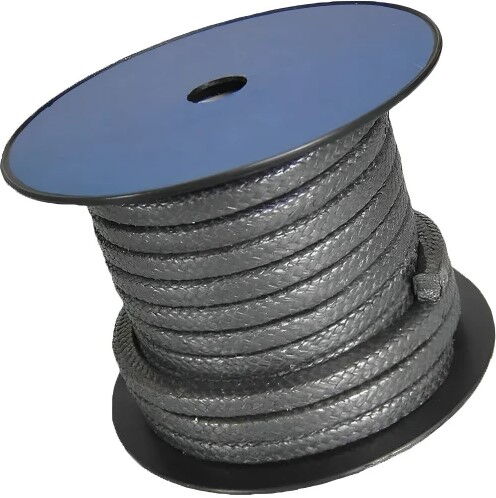
Graphite is a naturally occurring mineral composed of carbon elements and is widely used in industry due to its unique crystal structure and outstanding physical and chemical properties. Graphite is well known for its excellent self-lubrication, thermal conductivity, corrosion resistance, and chemical stability, making it an ideal sealing material.
Graphite packing is primarily woven from graphite fibers. Depending on specific application requirements, reinforcing materials such as carbon fiber, copper wire, stainless steel wire, or nickel wire can be incorporated to enhance strength and performance.
The self-lubricating property of graphite packing significantly reduces friction between the packing and the shaft during operation, minimizing wear and extending equipment service life. Its excellent thermal conductivity allows heat generated during operation to dissipate quickly, preventing overheating and ensuring stable equipment performance. Moreover, graphite's corrosion resistance and chemical stability enable it to maintain reliable sealing performance across a wide range of media, including acids, alkalis, and organic solvents, effectively preventing leakage.
Graphite packing is equally versatile in its applications and is widely used for sealing valves, pumps, and reactors operating under high temperatures, high pressures, and corrosive media. It is suitable for sealing hot water, superheated steam, heat transfer fluids, ammonia solutions, hydrocarbons, and even cryogenic liquids, making it a truly universal sealing packing.
In the chemical and pharmaceutical industries, graphite packing is commonly used for sealing reactors and pumps that handle highly corrosive chemical media. Its excellent corrosion resistance and chemical stability allow it to perform reliably in harsh chemical environments, preventing leakage and ensuring operational safety. Its self-lubricating and heat-conducting properties also enable long-term stable operation under high-temperature and high-pressure conditions, reducing maintenance requirements and operating costs.
Graphite packing also plays a crucial role in power generation and metallurgical industries, where equipment often operates under extreme temperature and pressure conditions. The high-temperature and high-pressure resistance of graphite packing ensures dependable sealing performance in steam turbines, boilers, and various reaction systems, preventing leakage, maintaining stable operation, and improving production efficiency.
The key strengths of graphite packing lie in its versatility and adaptability. Its performance can be tailored to specific operating conditions by incorporating different reinforcing materials. For example, stainless steel wire or nickel wire can be added to enhance strength and extrusion resistance under high-temperature and high-pressure conditions, while PTFE or other lubricants can be introduced to further improve self-lubrication when required.
Another major advantage of graphite packing is its exceptional universality. Thanks to graphite's chemical stability and corrosion resistance, graphite packing is compatible with a wide range of media and operating conditions, making it a truly all-purpose sealing solution. Whether dealing with weak acids, weak alkalis, or organic solvents, graphite packing effectively prevents leakage and provides reliable sealing performance. This high degree of adaptability makes graphite packing extremely flexible and valuable in industrial applications with diverse sealing requirements.
After gaining a thorough understanding of the excellent performance and broad applications of both carbon fiber packing and graphite packing, an important question naturally arises: how should one choose the most suitable packing material for a specific industrial application? To help answer this question, the following section provides a comprehensive comparison of these two sealing materials, examining their performance characteristics, suitable operating conditions, and respective strengths and limitations.
Both carbon fiber packing and graphite packing offer excellent sealing performance, but they differ in certain aspects. Carbon fiber packing features higher strength and modulus, enabling it to perform exceptionally well under high linear speeds and high-pressure conditions. Its excellent thermal conductivity and wear resistance also allow stable long-term operation in high-temperature environments. Additionally, its self-lubricating nature minimizes shaft wear and extends equipment service life.
Graphite packing, on the other hand, is renowned for its superior self-lubrication, thermal conductivity, and corrosion resistance. It performs particularly well when handling a wide range of chemical media and is highly effective at preventing leakage. With strong universality and good flexibility, graphite packing provides shaft protection and offers advantages in applications involving frequent start-stop cycles.
There are also differences in typical application areas. Due to its high strength and excellent high-temperature resistance, carbon fiber packing is better suited for high-temperature and high-pressure equipment in industries such as petroleum, chemical processing, power generation, and metallurgy. It is commonly used in steam turbines, boilers, reactors, and pumps where reliable sealing under extreme conditions is essential.
Graphite packing, with its strong universality and corrosion resistance, is widely used in chemical, pharmaceutical, food processing, and paper industries. It is suitable for sealing a broad range of media, including hot water, superheated steam, heat transfer fluids, ammonia solutions, hydrocarbons, and cryogenic liquids. In these applications, graphite packing ensures reliable sealing, safe operation, and improved efficiency.
When choosing between carbon fiber packing and graphite packing, it is essential to consider specific operating conditions and equipment requirements. If equipment operates under high temperatures and high pressures, involves high linear speeds, or handles corrosive media, carbon fiber packing is often the better choice due to its high strength, thermal resistance, and durability.
If the application involves a wide variety of chemical media and complex operating conditions, graphite packing may be more suitable. Its strong universality, chemical stability, flexibility, and shaft-protective properties make it particularly advantageous for equipment that experiences frequent start-up and shutdown cycles.
As leading solutions in the field of industrial sealing, carbon fiber packing and graphite packing provide reliable support for the safe and efficient operation of modern industry. Carbon fiber packing excels in high-temperature and high-pressure applications thanks to its high strength, excellent thermal resistance, and self-lubricating properties. Graphite packing, with its outstanding versatility, corrosion resistance, and superior self-lubrication, demonstrates exceptional sealing performance across a wide range of media and complex operating conditions.
By understanding the characteristics and differences of these two packing materials, engineers and operators can make more informed decisions, selecting the most suitable sealing solution to ensure safety, efficiency, and long-term reliability in industrial operations.
