Valve Optimization for Minimal Leakage & Maximum Service Life
In industrial production, valves are indispensable key components, and their performance directly affects production safety, efficiency, and economy. Whether valve leakage can be minimized and service life maximized depends on many factors, among which optimizing valve design and selection is crucial. This article explores how to achieve the best valve performance from the aspects of valve design and selection, choice of sealing type, product quality control, installation and construction, and production operation standards.
Valve design and selection are the foundation for ensuring valve performance. They involve multiple aspects, including the selection of valve type, the design and manufacturing of the valve itself, and the selection of valve materials. Only through comprehensive optimization can the valve achieve the best effect in actual applications.
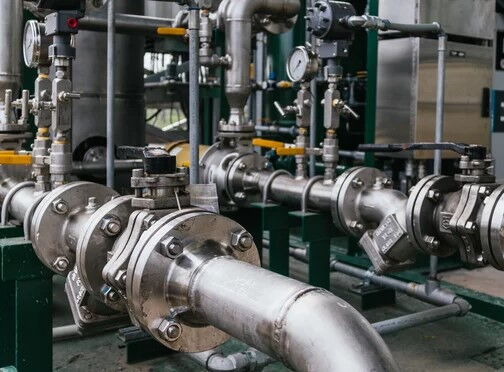
When selecting a valve type, a comprehensive consideration should be given to the requirements of process conditions and design specifications. The purpose of the valve, the temperature, pressure, flow rate, and pressure drop of the medium, as well as the corrosiveness of the medium, all directly affect valve selection.
For example, for liquids, gases, or two-phase fluids, the effect of using a gate valve or globe valve differs significantly from that of using a ball valve. The airtightness of a ball valve is better than that of gate and globe valves, and its opening and closing speed is much faster, but its usable temperature range is generally much smaller than that of gate and globe valves. In general, most ball valves cannot be used at high temperatures, while gate and globe valves maintain relatively stable performance under high-temperature conditions. The pressure loss of ball valves is lower than that of gate and globe valves; in comparison, the pressure loss of a globe valve is higher than that of a gate valve, which is determined by the intrinsic structure of the valve. For different material flow rates and flow regulation effects, different valve types will yield very different results. In high-speed flow conditions, globe valves are generally not suitable because they have the greatest pressure loss under high-speed flow, although they regulate flow better than gate and ball valves.
When selecting a valve type, the materials used to manufacture the valve should also consider the temperature and corrosiveness of the medium. The materials used for the valve must meet the process requirements at the valve's operating point. By reasonably selecting the materials of the valve trim and body according to the process requirements at the operating point, the valve's service life can be extended without significantly increasing costs. Simply pursuing higher-grade materials will only cause unnecessary waste.
The sealing performance of a valve is one of the key indicators of its quality. Leakage from the packing gland and from the valve body connection are the main causes of external valve leakage, so special attention is required.
Traditional soft packing seals rely on the axial pressure of the packing gland to generate a certain radial contact stress between the stem and the packing, as well as between the packing and the packing box side wall, to achieve sealing. Therefore, the axial force of the gland must be considerable, which increases the friction torque between the packing and the stem, accelerates wear, and causes the soft packing to wear quickly. It is necessary to frequently tighten the gland bolts or replace the packing to maintain good sealing performance. Using appropriate packing seals or packing combinations can improve valve reliability and extend service life. For example, the combination of flexible graphite ring packing provides better sealing performance than using only flexible graphite rings.
The sealing of valve body connections is a static seal and should meet the following requirements: it should accommodate rapid changes in temperature and pressure; allow multiple disassemblies without damaging the sealing elements; have a simple and compact structure with low metal consumption; be insensitive to vibration and impact loads; and meet the requirements for various working media. The body connection is usually sealed with birch grooves or male-female flat gaskets. In recent years, “O”-ring seals have also been widely used.
- Grooved Flat Gasket Sealing: A flat gasket is installed in a closed groove. This structure can generate high contact pressure on the sealing surface, often far exceeding the yield limit of the gasket material, ensuring reliable sealing. It is suitable for medium-to-high-pressure valves with pressures greater than or equal to 4.0 MPa. The drawback is that when the valve is disassembled, the gasket is difficult to remove from the groove, and the gasket may be damaged if removed improperly.
- Male-Female Flat Gasket Sealing: A flat gasket is installed on a male-female flange sealing surface. Compared with the birch groove flat gasket, it has the advantages of easier gasket removal during disassembly and better machinability due to the stepped sealing groove. Flat gasket materials may include aluminum, red copper, 1Cr18Ni9TI, and rubber asbestos sheets depending on process parameters and fluid properties. Fluoroplastic materials are also commonly used for gasket sealing, but improper design may lead to leakage due to their cold-flow properties.
- O-Ring Seals: O-rings have a simple structure and are easy to manufacture. With proper seal design, sufficient radial extrusion deformation can be achieved after assembly, providing sealing without axial load. Therefore, they are used as flange connection seals, reducing flange size and valve weight. For low-pressure, small-diameter valves, the body is usually connected with internal threads, and the sealing elements can be flat gaskets or O-rings to reduce structure size and weight.
Valve quality is an important guarantee for its performance. When selecting valves, priority should be given to products from reputable brands, which have strict standards and processes in design, manufacturing, and quality inspection, ensuring reliable performance. At the same time, attention should be paid to manufacturing processes and material quality to ensure compliance with relevant standards and specifications.
Even if a valve is well-designed and of high quality, improper installation or operational practices can affect its performance and service life.
- Installation: Valve installation should strictly follow the instruction manual to ensure the installation position, orientation, and connection method meet requirements. Care should be taken to protect critical components such as sealing surfaces and stems to avoid damage from improper installation. Additionally, the sealing performance at connection points should be ensured to prevent leaks.
- Production Operation: During production, operations should strictly follow standard procedures to avoid damage to valves. For example, valves should be opened and closed smoothly and slowly to prevent excessive force that may damage the valve. Regular maintenance and inspection are necessary to detect and address potential issues promptly, ensuring normal operation.
Despite measures to optimize design, seal selection, quality control, and operational standards, valve leakage remains a significant issue. Valve leakage mainly includes packing leakage and trim leakage.
Causes include incompatibility of the packing with the medium's corrosiveness, temperature, or pressure; incorrect packing installation, especially spirally inserting the whole packing; inadequate stem machining, surface finish, or ovality; pitting or rust due to lack of protection; bent stem; aging packing; and aggressive operation.
Solutions: Select appropriate packing that matches the medium's corrosiveness, temperature, and pressure; use correct installation methods, avoiding spiral insertion; improve stem precision and surface finish; apply corrosion protection; check stems regularly; replace aged packing; and operate smoothly.
Causes include poor grinding of sealing surfaces; improper fit of seals with seats and disks; weak stem-disk connections; stem bending or twisting; rapid closure; improper material selection; using gate or globe valves as control valves; erosion from high-speed media; thermal contraction; threaded seal corrosion; or foreign debris obstructing the valve.
Solutions: Improve sealing surface grinding; ensure tight fit of seals; strengthen stem-disk connections; check stem alignment regularly; operate valves slowly; select corrosion-resistant materials; avoid misusing valves as control valves; design for erosion resistance; avoid threaded connections prone to corrosion; and clean valves regularly.
External leakage mainly occurs in flange connections due to differential contraction of materials at low temperatures, causing joint relaxation and leakage. To prevent this, valve-to-pipe connections have been changed from flanged to welded connections.
F4 packing is widely used for its low friction and chemical stability, but long-term use may cause cold flow and high thermal expansion. At sub-zero temperatures, F4 packing can contract, causing leakage and ice formation on the stem, leading to slow or failed operation. Modern low-temperature butterfly valves use the characteristics of F4 packing to maintain ambient packing temperature through reserved gap space, preventing external leakage.
Valve performance directly impacts industrial production efficiency, safety, and economy. Optimizing valve design, sealing, quality control, installation, and operation can effectively reduce leakage and extend service life. Attention to leakage causes and remedies ensures reliable operation. With technological advancement, new materials and structures provide better options for industrial production. Continuous optimization of valve performance is necessary to meet production development needs and achieve efficient, safe, and sustainable industrial operations.