Valve Gasket Failure: Causes, Impacts & Preventive Measures
In industries such as petroleum, petrochemical, and chemical processing, production, processing, storage, transportation, and even sales often involve flammable, explosive, high-temperature, high-pressure, toxic, and corrosive hazards. During operation, leakage, seepage, dripping, or spilling of process media can cause significant harm to production. Leakage of process media in equipment not only leads to waste but also pollutes the environment. Gaskets, made from metal or non-metal sheet materials through cutting, stamping, or trimming processes, are the main type of static seal used at detachable connections in pressure vessels, process equipment, power machinery, and connecting pipelines in process industries. So, what are the causes of valve gasket failure, and how can they be prevented? This article provides a detailed explanation.
In the production processes of petroleum, petrochemical, and chemical industries, valve gasket failure is a common and important problem. It not only affects the normal operation of equipment but also brings serious safety risks and economic losses. Therefore, understanding the causes of gasket failure is key to prevention. The main reasons for valve gasket failure are as follows:
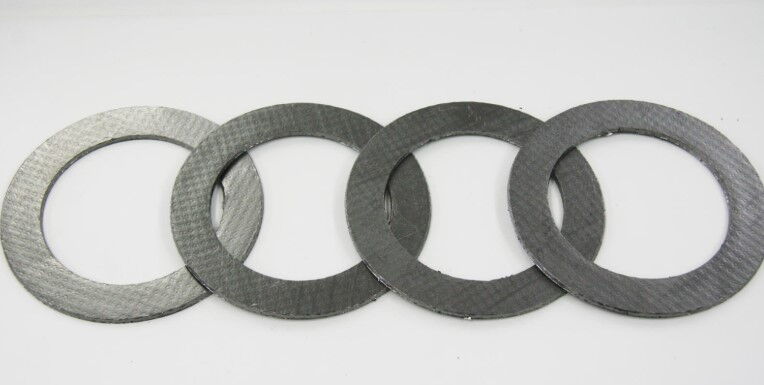
Uneven compression force is caused by multiple factors. First is human error, during installation, asymmetric pre-tightening of bolts easily causes uneven compression, which can be avoided during construction. Theoretically, when flanges are tightened, the sealing faces should be perfectly parallel. However, in reality, the pipeline centerline cannot be absolutely concentric, so tightening bolts may create bending moments on the flange, causing uneven stress. This asymmetric connection causes the sealing face to deform to varying degrees, reducing sealing pressure and making leakage likely under operational loads. Finally, bolt spacing density also significantly affects pressure distribution, the closer the bolts are, the more uniform the pressure.
Stress relaxation and torque loss are also major causes of leakage. After bolts are tightened on a flange, mechanical vibrations, temperature increases or decreases, and other factors can cause stress relaxation in the gasket, while the bolt torque gradually decreases, leading to torque loss and leakage. Generally, the longer the bolt, the higher the residual torque; the smaller the diameter, the more effective it is at preventing torque loss. Therefore, using long and thin bolts is an effective method to prevent torque loss. In addition, the greater the temperature variation and the longer its duration, the more severe the torque loss. Heating bolts for a certain time to elongate them and then maintaining a given torque is very effective in preventing torque loss. Additionally, the thinner the gasket, the smaller the torque loss. Preventing strong vibrations in machinery and pipelines, eliminating nearby equipment vibrations, avoiding unnecessary impacts on the sealing surface, and not striking tightened bolts can all prevent torque loss.
The shape and roughness of the flange sealing surface must match the gasket. For sealing surfaces in contact with metal gaskets, high dimensional accuracy is required, with roughness of Ra6.3–3.2. For soft gaskets, the sealing surface can have lower accuracy, with roughness of Ra25–12.5. However, the sealing surface must avoid radial mechanical scratches, burrs, or other mechanical damage. Flatness of the sealing face and perpendicularity to the flange axis are prerequisites for uniform gasket compression. If the sealing surface is unclean, mechanically damaged, corroded, or contains residual old gaskets, gasket sealing failure may occur.
Gasket material is a major factor affecting gasket performance. Gaskets should be dense and resistant to medium infiltration. Suitable gasket deformation, similar to elasticity, is necessary for sealing. Gasket deformation includes both elastic and plastic deformation. The material should withstand temperature and pressure fluctuations and corrosive media. If the gasket has good elasticity and softness, it can conform well to the sealing surface, not harden at low temperatures, nor soften or plastically flow at high temperatures, naturally providing good sealing. Temperature reduction also significantly affects leakage. Flange joint leakage often occurs during cooling because the flange and bolts cool at different rates, causing stress relaxation of the gasket’s compression force. Additionally, cold contraction of the pipeline generates forces toward the bolt’s stretching direction, promoting leakage. Therefore, in low-temperature media environments, gaskets with elasticity at low temperatures should be chosen; gasket thickness should be minimized, flange gaps reduced, and high-strength bolts used to reduce stress.
- Wastage and Environmental Pollution: Leakage of process media causes wastage and environmental pollution. In petroleum, petrochemical, and chemical production, the media often have significant value, so leakage leads to wastage and increased production costs. Simultaneously, leaked media can pollute the environment, disrupt ecological balance, and harm human health.
- Impact on Production Efficiency: Valve gasket failure causes equipment leakage, affecting normal operation and reducing production efficiency. Leakage during production may cause interruptions, requiring maintenance or gasket replacement. This wastes time and labor and affects production schedules, resulting in economic losses.
- Safety Hazards: Process media in petroleum, petrochemical, and chemical industries are often flammable, explosive, or toxic. Leakage caused by valve gasket failure may trigger fires, explosions, and other accidents, seriously endangering personnel safety and company property.
From the previous analysis, it is clear that valve gasket failure can be caused by uneven compression, stress relaxation and torque loss, flange sealing surface issues, and gasket material problems. These issues not only reduce production efficiency but also create safety hazards and environmental pollution. Therefore, taking effective preventive measures is crucial. Key preventive measures to minimize gasket failure risk and ensure safe and smooth production are as follows:
For equipment, pipelines, and vessels conveying flammable, explosive, toxic, or highly corrosive media, gaskets with higher temperature and pressure ratings should be selected according to operating conditions. During installation, ensure that the gasket and flange surfaces are clean; check for radial scratches on the gasket and verify flange surface roughness. Place the gasket in the correct position and use a torque wrench to achieve proper bolt pre-tightening. Non-metallic gaskets must be stored in dry, cool places, away from sunlight or outdoor exposure. Storage boxes must be labeled with gasket model, size, thickness, and specifications to avoid misuse.
During installation, strictly follow operational procedures to ensure clean flange surfaces, avoiding contamination that could affect sealing. Correct use of a torque wrench ensures proper bolt pre-tightening. Avoid insufficient or excessive pre-tightening that could lead to gasket failure. Ensure proper gasket placement and close contact with the flange surface to avoid gaps.
Temperature and pressure significantly affect gasket performance. For equipment operating under high temperature and high pressure, take effective measures to control these parameters, preventing gasket failure. For example, use cooling devices to reduce temperature or pressure-regulating devices to control pressure. Regularly check equipment temperature and pressure to detect and address abnormalities promptly.
Vibration and impact are important causes of gasket failure. During equipment operation, take effective measures to prevent vibration and impact, avoiding loosening or damage to gaskets. For example, install damping devices or use flexible connections to reduce vibration and impact. Avoid unnecessary collisions or hammering of equipment to protect gaskets and sealing surfaces.
Regular maintenance and inspection are important preventive measures. Periodically check gasket sealing performance and address any leakage issues. Inspect flange surfaces and bolts, replacing damaged components to maintain sealing integrity. Regular maintenance keeps equipment in good condition, extending service life.
Valve gasket failure is a common problem in petroleum, petrochemical, and chemical industries. Its causes are diverse, including uneven compression, stress relaxation and torque loss, flange sealing surface problems, and gasket material issues. Gasket failure leads to wastage, environmental pollution, reduced production efficiency, and safety hazards.
To prevent valve gasket failure, it is necessary to select appropriate gaskets, ensure installation quality, control temperature and pressure, prevent vibration and impact, and perform regular maintenance and inspection. Only by implementing these measures comprehensively can valve gasket failure be effectively prevented, ensuring safe operation and smooth production.
In summary, valve gasket failure is a complex issue that requires analysis and solutions from multiple aspects. By understanding its causes and taking effective preventive measures, the occurrence of gasket failure can be minimized, equipment reliability and safety can be improved, and contributions can be made to enterprise development and environmental protection.
